Short Answer
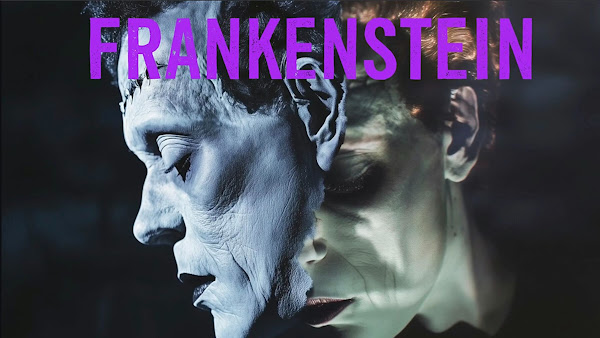
Mary Shelley’s Frankenstein is a powerful metaphor for how early caregiving and social pressures shape protective personas. These “masks” can calcify into automatic behaviors (behavioral cascades) unless an adult chooses to take conscious responsibility—what psychologists call an internal locus of control.
Frankenstein as a Mirror: Why the Metaphor Matters
Mary Shelley’s novel is commonly read as a gothic monster story, but its core dynamic — Dr. Victor Frankenstein creating life and then refusing responsibility — maps directly onto parenting, leadership, and identity formation. The creature is not born malicious; abandoned, it becomes what the world expects of it. That arc helps us see how early relationships and social feedback write operating rules for a lifetime.
How Childhood Builds Protective Masks
Between ages four and five, children begin to notice that their choices produce predictable reactions from adults. Because young children depend on caregivers and teachers, they are predisposed to develop an external locus of control: they learn to adapt to others’ expectations to secure safety and belonging.
To survive criticism, neglect, or unpredictable care, children form shields — habitual personas they present to the world. Common forms of these masks include:
- The People-Pleaser: Always compliant to avoid rejection.
- The Performer: Seeks approval through achievement or spectacle.
- The Stoic: Suppresses feelings to keep peace.
- The Withdrawn: Hides to avoid further hurt or shame.
When these public personas diverge from a person’s private needs and values, maintaining the facade consumes energy and prevents genuine self-esteem from developing.
Neglect, Nurture, and the Rise of Behavioral Cascades
Very few adults arrive at perfect self-knowledge because few families are perfect. Most of us are mixtures of intentional parenting, missed signals, and unresolved anger. When those early experiences remain unexamined, outside forces move in to fill the gaps. As one clear observation puts it:
“Marketing, consumerism, pop culture, and social movements quickly nudge their way in to fill the vulnerable gaps in our identity. If you don’t intentionally design your own architecture, the outside world will design it for you.”
Those gaps become behavioral cascades: automatic sequences where an old insecurity triggers a modern behavior without conscious choice. For example, a childhood history of feeling overlooked may push someone toward flashy possessions to capture attention, yet the attention itself can feel intolerable, producing a paradox of craving visibility and wanting to hide.
How to Dismantle the Mask: Moving Toward an Internal Locus of Control
You cannot change your past, but you can change how you respond to it. The crucial step is shifting from blaming childhood conditions to taking ownership of your current mental software. Practical moves include:
- Map the masks: Name the roles you play and where they came from.
- Track triggers: Notice the situations that flip you into automatic behavior.
- Choose actions: Replace reflexive responses with deliberate steps aligned to your values.
- Practice tiny experiments: Try new behaviors in low-stakes settings to update your internal model.
- Seek reflective community: Surround yourself with feedback that helps you rewrite your story.
As you replace reactive patterns with intentional choices, the influence of those protective masks decreases and your agency grows. For a philosophical lens on freedom and agency, see Existentialism and Human Freedom on Stanford Encyclopedia of Philosophy.
Where to Go Next: Resources and Community
Understanding these ideas is one thing; practicing them is another. Inside communities like Syndicate X Library members use dialogue and tools to dismantle old programming and build new habits. To support daily practice, consider using the I AM LEADER Workbook for Leadership Mastery to log decisions, track progress, and document changes.
For more context on myth, narrative, and reinvention, read Jena Malone on The Flowering Wand and Rewriting Myths. To access the full set of video lessons and peer discussions related to this topic, visit the private Syndicate X Community Platform.
Frequently Asked Questions
Why is Frankenstein often read as a lesson in parenting and leadership?
Frankenstein shows what happens when a creator refuses responsibility for what they bring into the world. In parenting and organizational leadership, leaving a person, process, or culture unattended invites dysfunction. The novel dramatizes the consequences of creation without care.
In what ways do protective masks block personal development?
Masks form to protect a vulnerable child, but when maintained into adulthood, they cause misalignment between public actions and private values. That dissonance produces anxiety, drains energy, and prevents authentic growth because effort goes toward impression management rather than real self-work.
Can you explain a “behavioral cascade” in simple terms?
A behavioral cascade is a chain reaction: an unresolved childhood belief triggers a habitual adult response without conscious choice. These cascades automate reactions that once served survival but now undermine wellbeing and clarity.
Where can I watch the full Frankenstein video course?
The complete masterclasses, study materials, and discussion groups referenced here are hosted inside the private Syndicate X Community Platform. Members can access videos, guides, and community boards there.
Drop the Mask
Every person carries traces of the “monster” — parts formed by neglect or the need to belong. You are not stuck by those early programs. Take stock: What roles are you rehearsing, and which ones are you willing to retire? If you want structured tools and a community to help, claim your copy of the I AM Leader Bookset and join Syndicate X Library to begin redesigning your inner architecture.
Related reading on dealsofdreams.com: What Leaders Know About Agency and Real Power of Choice; Claiming Your Internal Locus Changes Everything in Life.
