Direct Answer
Yes — according to former CIA officer Andrew Bustamante, “outsmarting” is not about trickery but about saving mental effort for others so they can reach conclusions they already want, producing net-positive outcomes for both sides.
What this piece answers
This article reworks Andrew Bustamante’s ideas from his book Outsmart Everyone and his public discussion: how to read people better, why vulnerability builds connection, and how “radical preference” turns craft into enduring work. All facts, names, quotes, and links below appear as reported in the original conversation.
Intro angle: tradecraft applied to everyday empathy
Instead of presenting influence as competitive leverage, Bustamante reframes it as a method for reducing other people’s cognitive load so they can arrive at a beneficial decision faster. This approach borrows from intelligence tradecraft but repurposes those skills toward trust, clarity, and mutual gain.
Direct takeaways
- Outsmarting = cognitive easing: Help someone skip unnecessary brainwork toward a conclusion they want.
- Vulnerability builds connection: Public strength often repels; shared weakness opens a path to trust.
- Radical preference: Obsessive care for your craft turns competent work into something that resonates long-term.
Who is Andrew Bustamante?
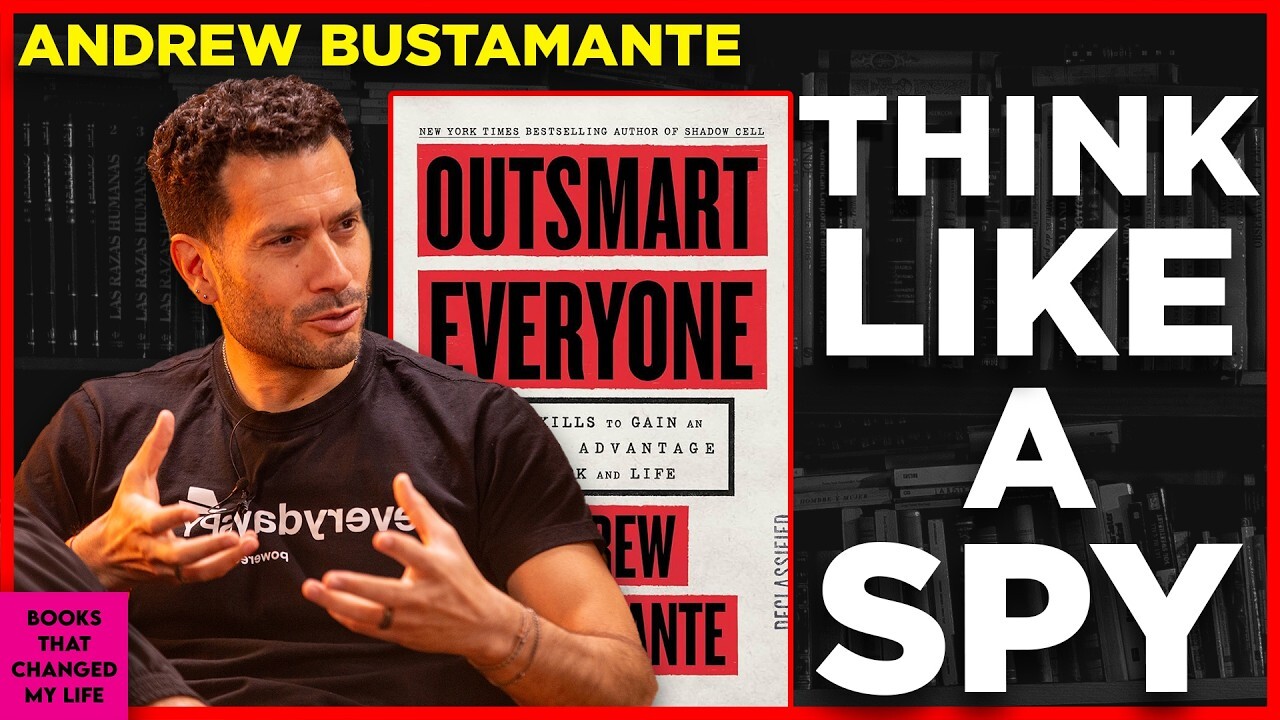
Andrew Bustamante is a former CIA intelligence officer and a US Air Force former nuclear missile operator. He runs EverydaySpy, speaks on tradecraft applied to business and relationships, and authored Outsmart Everyone: Spy Skills to Gain an Unfair Advantage in Work and Life.
What the book and talk cover
Outsmart Everyone translates covert methods into everyday tools: rapid human analysis, negotiation strategies, and communication techniques that prioritize honest outcomes over winning at any cost.
Tradecraft of human connection
Bustamante emphasizes that people often display a public self meant to signal competence. That outer shell — his metaphor of “two turtles trying to cuddle” — prevents genuine contact. Instead of competing on staged strengths, he recommends lowering defenses by acknowledging shared burdens and vulnerabilities.
- The three lives: public, private, and secret spheres consume energy. The public persona often masks real needs.
- Skin-to-skin connection: Real rapport happens when interactions move from public performance into true private-level exchange.
- Leadership isolation: Executives and high performers can feel uniquely lonely; connecting over that weight is more effective than attempting to impress.
Strategic influence: not manipulation but guided clarity
Bustamante frames influence as guiding someone’s thinking — helping the brain skip unnecessary steps to reach a conclusion that benefits them. Below is a direct comparison of the conventional view of manipulation and the tradecraft approach he advocates.
What is “radical preference”?
“Radical preference” is Bustamante’s term for an uncompromising devotion to the details of your craft. It’s not efficiency for its own sake, but caring so deeply about the desired outcome that you accept friction and iteration until the work expresses what you truly value.
Notable quotes
“We repel each other with our strengths and connect with each other through our vulnerabilities.” — Andrew Bustamante
Bustamante also uses the image of “turtles trying to cuddle” to describe how two defended people block intimacy despite being close.
Where to watch or listen
- Full video conversations are on the Books That Changed My Life YouTube Channel.
- Listen to the complete uncut conversation on Spotify.
- Browse the archive on the main website or the official podcast directory.
Practical steps to apply these ideas
- Start conversations by admitting a small, relevant weakness to invite reciprocal openness.
- When persuading, remove friction: present the simplest next step that aligns with the other person’s goals.
- Choose craft over convenience on projects that matter — let “radical preference” shape your work until it truly reflects your values.
Further reading and related episodes
Frequently Asked Questions
Q: Is “outsmarting” someone the same as manipulating them?
A: Not in Bustamante’s framework. Rather than coercion, outsmarting here means doing the mental heavy lifting for someone so they can reach a beneficial decision with less friction. The aim is a positive result for both parties, not a one-sided win.
Q: If both people know tradecraft techniques, do those skills still work?
A: Yes. These methods are rooted in stable human psychology and cognitive shortcuts. When both parties understand the effort involved, they can accelerate alignment because they’re operating from shared, recognizable cues rather than surprise tactics.
Q: How can you connect with guarded leaders and executives?
A: Skip matching their public displays of authority. Instead, acknowledge the universal pressures they face — responsibility, loneliness, and scrutiny — and offer empathy that lowers defenses. That shared recognition opens pathways to trust more reliably than status signaling.
Closing thought
Bustamante’s work reframes strategic intelligence as fundamentally human intelligence. Influence that lasts is built on vulnerability, clarity, and craftsmanship — showing up authentically and helping others think more easily toward better outcomes.
If you want structured frameworks for leadership and autonomy, the I AM LEADER Book Set is cited as a resource that provides blueprints for maximizing leadership potential.
Related reading on dealsofdreams.com: Are You Hiding Behind an Alter Ego: Key Takeaways; Frankenstein, Masks, and Reclaiming Your Agency.
